
Personalized Handwriting Classes for Teens
Teen handwriting training targets higher-class writing demands, including readable exam speed, clearer answers, note-taking and page presentation. Current school writing is reviewed first, then personalized guidance focuses on habits affecting clarity, cursive flow and speed.
- Higher-class writing demands
- More readable exam-page writing
- Better speed with readability
- Clearer written-answer presentation
- Smoother cursive where suitable
- Current school writing reviewed first
| Learners | : | Teens improving class and exam writing |
|---|---|---|
| Exams | : | More readable exam-page writing |
| Speed | : | Readable writing at better speed |
| Answers | : | Clearer written-answer presentation |
| Cursive | : | Smoother cursive flow where suitable |
| Neatness | : | Cleaner page presentation |
| Review | : | Current handwriting checked first |
| Materials | : | Books and handwriting practice toolkit |
| Duration | : | Generally 2-3 months |
| Support | : | 3 months free guidance after course |
Handwriting Guidance for Teen School Demands
Teen training focuses on readable speed, clearer answers, note-taking and page presentation for demanding schoolwork. Online handwriting classes for teens can focus on school notes, exams and presentation, while handwriting improvement for teenagers is matched to current writing habits.
- Current notes, classwork or test writing are reviewed to identify spacing, cursive, clarity and pace issues that affect longer written tasks.
- Practice can improve readable speed and answer layout while preserving consistent letter forms and enough spacing under normal school time pressure.
- Guidance is matched to the teen’s actual writing demands, including notes, tests and exams, rather than using the same drills designed for young children.
Teen learners often need readable speed, clearer answers and better page presentation as school writing demands increase.
- Current writing can reveal whether spacing, cursive flow, letter consistency or rushed formation is reducing readability in longer school tasks.
- Practice can combine notes, written answers and timed work so the learner improves useful pace while preserving clarity and page organization.
- The focus is practical school and study writing, not forcing decorative cursive when the learner’s main need is readable, efficient written work.
Teen Exam and Note-Writing Review Samples
Sample cards focus on teen writing needs such as readable pace, notes, answer clarity and page organization as school demands increase.
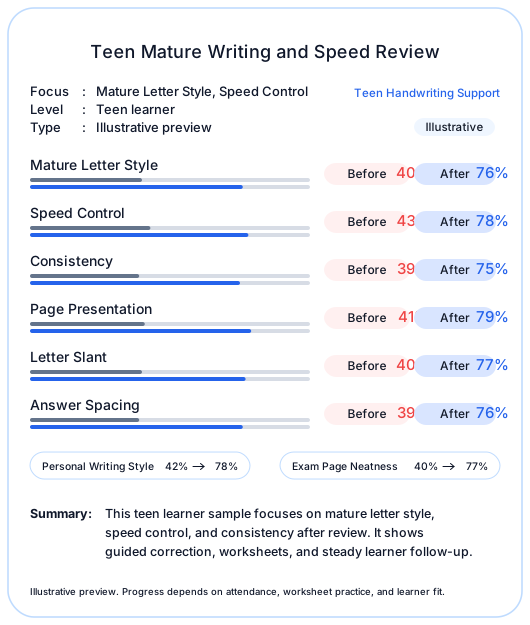
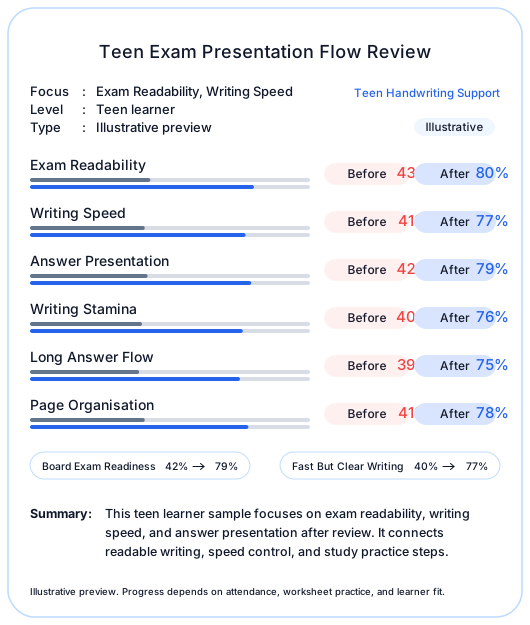
Teen Writing Priorities for Clearer Schoolwork
Teen support works on readable notes, pace and page control so school writing stays dependable without decorative style.
Guidance improves note readability when faster teen writing becomes crowded, unclear or difficult to study from later.
Practice builds control under school or exam pressure so pace can increase without causing loss of spacing or letter clarity.
Correction strengthens line use, consistency and page organisation when writing needs a clearer repeatable structure.
The goal stays practical: readable schoolwork, useful pace and dependable presentation rather than decorative writing.
Teen Writing Priorities for Notes and Answers
Teen guidance focuses on practical study writing, correcting flow, clarity, spacing, speed and presentation.
Teen Cursive Flow and Clarity
Cursive work can refine joins, slant and spacing while respecting a writing style used for notes and school answers.
Teen Practical Writing Practice
Guided tasks can use real study writing to improve letter size, word spacing and page layout without childish practice.
Teen Handwriting Improvement
A recent sample helps identify habits behind messy notes or unclear answers so correction starts with a useful target.
Teen Readable Speed Support
Speed work can improve pace for longer answers while protecting word clarity, line control and page organisation under time.
Teen Handwriting Priorities for Longer Work
Teen guidance focuses on notes, longer answers and pace so writing stays readable when schoolwork becomes denser and faster.
Develop a quicker note-taking style while protecting letter clarity and spacing so notes remain useful when read back later.
Improve line use, word gaps and page organisation so everyday subject notes look cleaner without decorative writing.
Keep words, lines and answer sections easier to follow as written tasks become longer and more content-heavy at school.
Reduce large shifts in letter size, spacing and baseline so handwriting stays steadier beyond a carefully written paragraph.
Practise margins, line balance and answer layout so faster school writing remains easier for learner and teacher to review.
Use practical correction and repeatable habits so longer written work feels manageable without pressure to copy a new style.
How Teen Handwriting Guidance Gets Started
Teen guidance uses current notes or answers to set one practical correction priority for clarity, pace or presentation.
Use real notes, assignments or a sample page so the review reflects the teen’s usual writing.
Choose the first priority from readability, cursive flow, pace, spacing or presentation after review.
Live correction explains the change without child-level drills and keeps teen practice relevant.
Worksheets and later reviews reinforce the target so changes carry into notes, assignments and answers.
Teen writing can become less consistent across long notes or answers, so review should check what changes first as realistic pace increases.
- Check whether letter size, spacing, joins, baseline control or page organisation changes first when the teen writes at a faster realistic pace.
- Keep the teen’s natural style where it remains readable; correction should remove confusing habits rather than impose a decorative replacement style.
- For exam-facing work, practise headings, answer spacing and longer passages at a realistic pace instead of judging only slow copied paragraphs.
- Increase teen writing speed only after the main readability problem stays stable across more than a few lines of ordinary written work.
Teen support tools focus on mature readability, speed, answer presentation and natural writing habits rather than lower-primary drills.
Focused practice sheets matched to present needs within teen handwriting support.
Writing reviews help keep the next correction point clear within teen handwriting support.
Short notes help the learner know what to repeat within teen handwriting support.
The learning path may shift if the first focus changes within teen handwriting support.
Quick guide
Teen handwriting support should respect mature writing habits, school workload and the need for readable speed, rather than repeating lower-primary handwriting drills.
Teenagers can improve handwriting when the plan respects their age, school workload, and need for faster, mature, readable writing. The guidance should avoid childish practice and focus on presentation, speed, clarity, and handwriting skills.
Teen learners often need help with rushed writing, inconsistent size, cramped spacing, unreadable long answers, mixed print-cursive habits, and handwriting that looks careless under exam pressure.
Handwriting coaching for teens can support print or cursive writing when it helps the learner keep school work readable, steady and practical at normal pace.
A writing sample helps to identify whether to correct letter shape, spacing, slant, joins, speed, or answer presentation first.
A teen learner can start with a demo or sample review so guidance does not repeat lower-primary handwriting drills. The goal is confident handwriting that still feels natural for the learner.
Can bad handwriting be corrected at 13, 14, 15, or 16?
Yes. Habits may take time, but teenagers can improve readability, spacing, and speed with guided correction and practice.
How can teenagers make handwriting mature and readable?
They should work on consistent size, controlled spacing, smoother joins or print strokes, neat handwriting, and page presentation under realistic writing speed.
Is cursive required for teens?
No. Cursive is useful only when it improves flow and readability for the learner’s writing goal.
Practise the Writing Style Used for Notes and Exams
Teen handwriting correction should work with longer answers and faster note-taking, not only short display sentences.
- Identify which feature changes first as pace increases: size, spacing, joins, baseline or page organization.
- Keep readable elements of the learner’s personal style and correct only the habits that reduce clarity or consistency.
- Use longer realistic tasks before deciding that a faster writing style is stable enough for school use.
Teen Handwriting Questions
Handwriting classes for teens online can support readable pace, note-taking needs and a practical first live step based on current writing.
Is this mainly for school-going teens?
Yes. It is mainly for teens who want clearer school and exam writing.
Can it help with fast but messy writing?
Yes. That is one of the common reasons learners join this support option.
Is the first teen handwriting demo free?
Yes. The first teen demo is free and helps check readable pace, note-taking needs and support fit.
Are worksheets included?
Yes. Worksheets and feedback are part of the guided coaching flow.
Will this force a decorative writing style?
No. The focus stays on practical readable writing and better presentation.
Can a teen send current school writing first?
Yes. A recent note or answer sample can be reviewed first when you want the next step based on normal teen writing.
Start with a free demo or normal school-writing sample so teen guidance can address readable note-taking, longer answers, spacing and practical pace.


