
Personalized Handwriting Programs for All Ages
Explore handwriting programs for kids, students, teens, adults, one-to-one learners, groups and schools. Options differ by learner, class level and delivery format, while the approach remains review-first, live and personalized. Choose the program that matches the training need.
- Options for different learners
- Kids, students, teens and adults
- One-to-one and group options
- Class-wise student options
- School training options
- Choose by learner and delivery need
| Options | : | Handwriting program options |
|---|---|---|
| Learners | : | Kids, students, teens and adults |
| Personal | : | Personalized learner-focused plans |
| Classwise | : | Class-wise student options |
| Schools | : | School training options |
| Online | : | Live online guidance available |
| Review | : | Current handwriting assessed first |
| Materials | : | Books and handwriting practice toolkit |
| Support | : | 3 months free after regular course |
| Choose | : | Select a program based on learner need |
Choose a Handwriting Program by Learner Need
Program options differ by learner age, school stage, format and writing goal, so the right choice starts with need. Online handwriting programs can be matched to learner needs, while an online handwriting improvement program uses review, guided practice and follow-up rather than one fixed method.
- Kids, students, teens, college learners and adults have different writing demands, while group and one-to-one formats suit different support levels.
- Separate options also cover speed writing, summer practice, international one-to-one access and school training, each with its own purpose.
- Instead of choosing by program name alone, learners can begin with a demo or writing review and then follow the option that best matches the writing.
Program choice should follow the learner’s age, current writing concern and preferred training format rather than one.
- Kids and school students may need class-stage guidance, while teens, college learners and adults can have different clarity, speed or presentation goals.
- One-to-one, group and online options serve different delivery needs, while school programs follow a separate offline training structure.
- Reviewing the learner’s current handwriting first helps narrow the program choice and prevents a general course label from replacing actual assessment.
Offline School Training Is a Separate Program Path
School requirements need a broader offline training plan than the individual live online options listed for learners and families.
MAX Academy for Excellence handles offline school handwriting training, including class-wise programs, workshops, materials and longer support planned with each school.
CursiveClasses.in remains the online public brand for individual learner guidance, while school delivery is planned separately around class levels, groups and schedules.
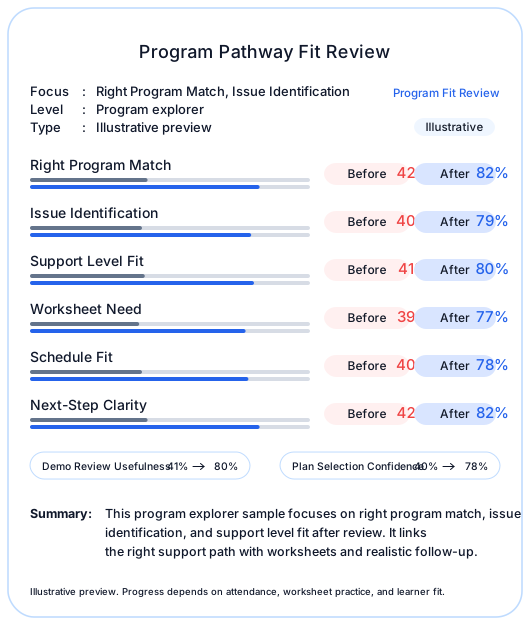
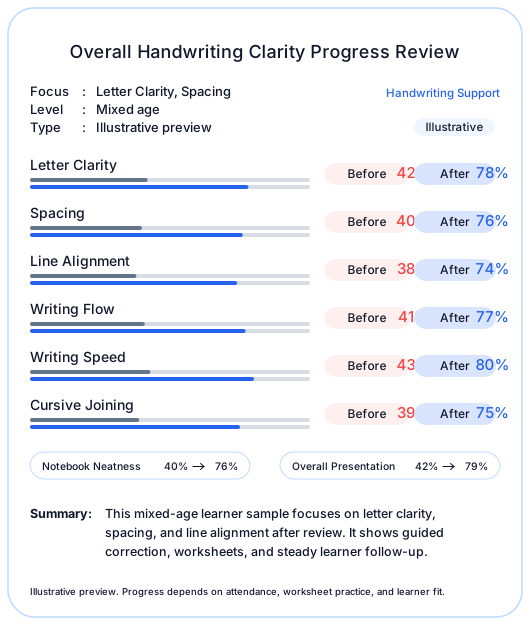
Program-Fit Handwriting Review Samples
Sample cards show how age, writing concern and review findings can guide a suitable handwriting program and practice route.
Choosing the Right Handwriting Program
Program selection starts with current writing, then matches correction priorities with a suitable support direction.
Handwriting Improvement Program
A review-led plan can target spacing, alignment, letter shape, slant, neatness or pace from the learner’s actual writing.
Cursive Handwriting Program
Cursive support can improve joins, flow and spacing through guided correction so connected writing becomes clearer.
Readable Speed Writing Program
Speed work builds pace with legibility, line control and page organisation so faster writing remains useful for real tasks.
Compare support paths by learner stage, writing goal and guidance depth after writing has been reviewed.
Foundational guidance for letter formation, spacing, line use and writing confidence when early habits need correction.
School-focused support for readability, notebook work, answer writing and a practical balance between neatness and pace.
Guidance for clearer notes, steadier longer writing and stronger page presentation as school demands become heavier.
Practical handwriting support for notes, study, work and everyday writing without forcing a child-style handwriting model.
A pace-focused path for learners who need faster writing while preserving spacing, clarity and usable page presentation.
Closer individual correction for learners who need more direct feedback, customized practice and tighter follow-up.
Offline school handwriting support through MAX Academy for Excellence, including class-wise, workshop and longer program routes.
Compare Handwriting Guidance Program Types
Compare learner stage, writing focus and the most useful next step before choosing a demo, sample review or closer guidance.
| Program Type | Best For | Main Focus | Next Step |
|---|---|---|---|
| Kids Path | Early and primary learners | Formation, spacing, line control and early writing confidence | Book a free demo |
| Students | School-going learners | Legibility, notebook neatness, writing control and school-use clarity | Send a writing sample |
| Pre-Teens / Teens | Older school learners | Consistency, readable pace, spacing and written presentation | Book a free demo |
| College / Adults | College learners and adults | Clarity, writing comfort, practical pace and everyday readability | Choose demo or review |
| Speed Writing | Slow or pace-pressure writers | Readable speed, steadier rhythm and clarity during faster writing | Send current sample |
| Premium 1-on-1 | Learners needing closer review | Direct guidance, focused correction and tighter follow-up on one goal | Book a fit-check demo |
What to Compare Before Choosing a Program
Compare learner stage, writing need, review depth and follow-up before selecting the handwriting support page that fits best.
Choose a program page that matches the learner stage because early writing, school answers and adult handwriting have different needs.
Use a recent sample to decide whether formation, spacing, cursive flow, readable speed or presentation should lead the plan.
Some learners need a light review while others benefit from regular live correction, worksheets and closer progress follow-up.
Compare individual, shared or parent-supported practice only after checking whether the learner can use that format comfortably.
What Each Program Choice Should Clarify
Program choices should connect the learner’s age, current writing sample and improvement goal with the right level of live guidance and practice.
Pages and notebooks often begin to look more readable and steadier within program selection.
Learners begin building more even letter and word spacing within program selection.
Writing speed becomes easier to manage without losing too much control within program selection.
Families understand what needs practice and how guidance is being guided within program selection.
Helpful guide
Program selection starts with the learner’s age, current writing sample and goal. The demo or review confirms whether one-to-one, group, cursive, online or speed-focused support is appropriate.
CursiveClasses.in may guide learners through different handwriting improvement programs based on age, writing issue, and goal. A handwriting improvement course should follow a demo or writing sample review, so the learner is moved to a suitable support option instead of a generic package.
The right handwriting improvement course may include cursive handwriting practice, speed writing support, neatness correction, worksheet correction, or one-on-one guidance. Personalized handwriting classes need to match the learner’s sample, age, speed, neatness, and writing goal.
Compare cursive handwriting, online-class and speed-writing options based on the learner’s writing sample and improvement goal. The best program fit is confirmed after a demo or sample review, not from a generic label alone.
How should I choose a handwriting program?
Begin by checking the learner’s age, current writing issue, and goal, then confirm through a demo or sample review before choosing a handwriting improvement course.
Are all programs suitable for kids and adults?
No. The best program depends on the learner’s stage and need.
Can programs include cursive practice?
Yes. A cursive writing course focus may be included when cursive practice matches the learner’s goal and current writing sample.
Choose a Program by the Writing Need, Not the Label Alone
Program names help organize options, but the learner’s current writing should decide which support path makes sense.
- Start by identifying whether the main need is basic formation, spacing, cursive flow, readable speed, page presentation or continued review.
- Choose the lightest support path that can realistically address the problem, then increase support only if the learner needs closer correction.
- Use later samples to confirm whether the selected path is working before changing programs or adding more practice.
Program Questions
Short answers for comparing programs and choosing the right next step.
How do I know which program fits best?
The fit is usually decided after the first review or demo because the right path depends on learner stage, writing pattern, and guidance depth.
Do all programs include worksheets?
Worksheets, sample review, and feedback are part of the guidance flow, with quantity and focus varying by learner need.
Can the learning path change later?
Yes. The guidance direction can be reviewed again if a different focus becomes more suitable after the initial stage.
How do regular plans usually begin?
Most programs begin with a demo or writing review, followed by the suitable next-step recommendation.
Is there one fixed learning format for every learner?
No. The learning path is chosen based on learner need, writing pattern, and the level of follow-up required.
Should I start with a learner-stage page or a focused program page?
Either can work. Many families begin with the learner-stage page, while others start with a focused page like Speed Writing when the main goal is already clear.
Can I send a sample before choosing a program?
Yes. A writing sample often makes the next recommended path much clearer, especially when choosing between neat handwriting work, cursive practice, spacing correction, and writing-speed support.
Start with a free demo or current sample so program labels are compared against the learner’s real writing need rather than chosen in isolation.


