
Handwriting Classes for Students from Class 1 to 12
Explore handwriting classes from Class 1 through Class 12, with writing goals matched to the learner's school stage. Lower classes build formation, spacing and control, while later classes address cursive, longer answers, readable speed and exam writing where appropriate.
- Class 1 through Class 12
- Goals change by school level
- Cursive only where age-suitable
- School and exam needs by stage
- Current school writing reviewed first
- Open the learner's class page
| Range | : | Class 1 through Class 12 |
|---|---|---|
| Levels | : | Writing goals matched to class level |
| Focus | : | Age-appropriate writing priorities |
| Cursive | : | Cursive support where suitable |
| School | : | School and exam-writing priorities |
| Review | : | Current school writing checked first |
| Materials | : | Books and handwriting practice toolkit |
| Duration | : | Generally 2-3 months |
| Support | : | 3 months free guidance after course |
| Choose | : | Open the learner's class page |
Handwriting Priorities from Class 1 to Class 12
Class-wise guidance changes with the learner’s school stage instead of repeating the same handwriting goals for every grade. Handwriting classes for class 1 to 12 are organized by school stage; online handwriting classes for class 1 to 12 use the same class-wise goals, and class wise handwriting classes help families compare the right level.
- Lower classes focus on formation, size, baseline use, spacing and writing control, with early cursive introduced only when the learner is ready.
- Middle classes build smoother joins, consistency, paragraph writing, notebook clarity and a steadier pace as everyday school writing becomes longer.
- Higher classes place more emphasis on readable speed, long answers, notes, page layout and exam writing while protecting clarity under time pressure.
Choose Handwriting Practice by School Class
Searches for handwriting for Class 1–12 often mean different things: a short writing example, help with cursive control or structured live training. Each class page now includes a small writing-practice exercise.
- Classes 1–3 focus on letter shapes, line use, short sentences and spacing. Classes 4–6 develop paragraph presentation, readable joins and longer notebook writing.
- Classes 7–9 add note-taking consistency and readable pace. Classes 10–12 focus on longer answers, exam presentation and writing that remains legible under time pressure.
- Open the appropriate class below for a practice example, or compare live online handwriting classes when trainer-led support is needed.
How Handwriting Priorities Change from Class 1 to 12
The right handwriting goal changes with school stage, so each class page focuses on developmentally suitable writing demands.
Lower classes build letter formation, spacing, baseline use and control before expecting sustained cursive or faster writing across long tasks.
Middle classes strengthen cursive flow, paragraph consistency, notebook presentation and readable pace as daily written work becomes longer.
Higher classes focus more on notes, long answers, exam readability, page layout and writing endurance while preserving clarity under time pressure.
Offline Class-Wise Training Is Available for Schools
Individual class pages guide families, while schools use a separate offline path for class, batch or section requirements.
Individual Class 1-12 pages help families compare learner-stage guidance for online training, with writing priorities changing as school demands develop.
Schools use MAX Academy for Excellence for offline class-wise handwriting training when the requirement covers batches, sections, materials or longer support.
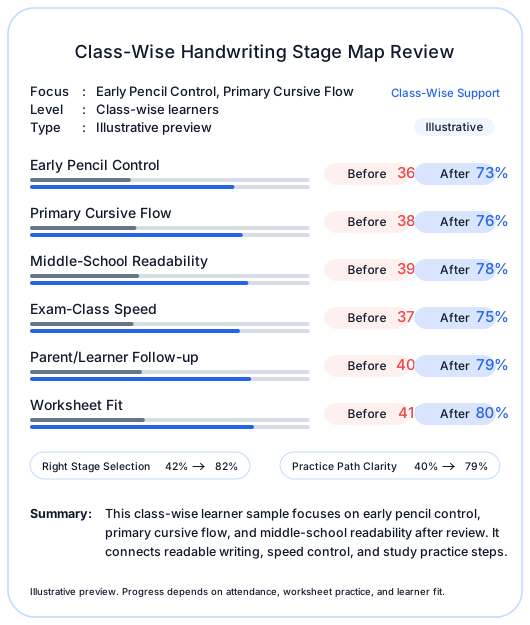
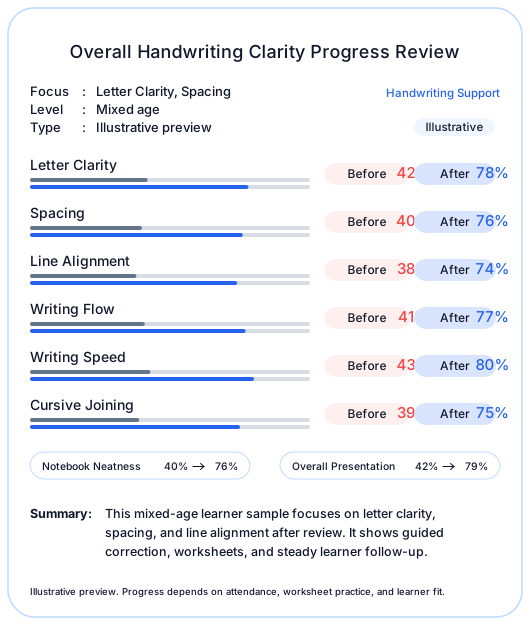
Class-Wise Handwriting Review Examples
Review cards show changing handwriting priorities across early primary, middle school and exam stages without repeating one focus.
Choosing Handwriting Support by Class Level
Class-level guidance helps families compare formation, cursive, neatness, speed and presentation before choosing a page.
Class-Level Writing Improvement
The right class page connects correction with the learner’s present stage instead of treating every age group alike.
Cursive Readiness by School Stage
Cursive support can focus on joins, spacing and word flow when the learner is ready while school writing stays readable.
Class-Wise Training Direction
Class-wise guidance moves from early foundations to longer answers, readable speed and presentation as school demands grow.
Lower-Class Handwriting Pages to Compare
Use the Class 1 to Class 3 pages to compare early formation, spacing and school-writing needs before choosing the best starting point.
Early writing foundations, letter formation, baseline use and confidence for the first stage of regular school writing.
More consistent letters, word spacing and line control as simple sentence writing becomes a larger part of schoolwork.
Developing cursive joins, sentence spacing and notebook neatness as writing becomes longer and more independent.
Handwriting Guidance for Classes 4 to 12
Compare handwriting priorities from Class 4 to Class 12, with each page focused on the writing demands of that school stage.
Build cursive fluency, paragraph alignment, spacing and consistent presentation.
Strengthen cursive flow, paragraph spacing, legibility and steady school pace.
Improve answer clarity, consistent letter size, longer writing and readable pace.
Develop clearer answers, note-taking control, readable pace and page presentation.
Support longer answers, note speed, spacing control and early exam-writing readiness.
Work on exam pace, answer layout, readability and neatness under time pressure.
Build board-answer clarity, useful speed, sustained writing and presentation.
Improve long-answer readability, note writing, sustained speed and page layout.
Focus on exam efficiency, long-answer clarity, presentation and writing endurance.
Useful Middle and Senior Class Pages
These links help families compare handwriting guidance by school stage before choosing a current-writing review or a live demo.
- Class 8 handwriting classes for longer school notes, spacing control, readable pace and early exam presentation.
- Class 12 handwriting classes for exam-year speed, long-answer clarity, presentation and writing endurance.
- Free demo session when you want learner fit checked before choosing the most suitable class-specific support path.
Use the class-wise pages to match handwriting expectations to the learner’s school stage, then confirm the actual correction priority from current writing.
- Families often need help with handwriting skills, readable speed and neat presentation before deciding which class-level support fits best.
- Families can compare class-level handwriting needs, live-guidance expectations and the most relevant class support.
Helpful guide
Class-wise guidance should match the learner’s school stage without assuming every child has the same handwriting problem. A sample review identifies the real correction priority before practice is chosen.
CursiveClasses.in organizes handwriting support by school stage so parents can choose the right class-level page. A younger learner may need pencil control and letter formation, while older students may need speed and exam presentation.
Each class page may focus on the learner’s age, writing load, and school expectations. This keeps practice more useful than one common plan for every student.
Parents can start with the class page closest to the learner’s current school level, then book a demo or send a writing sample for review. This hub also points learners toward school handwriting support, class level handwriting improvement, and handwriting practice for school students through class wise handwriting practice pages.
Do all class pages have the same handwriting plan?
No. The focus changes by class stage, writing maturity, and learner need.
Which page should parents choose first?
Choose the learner’s current class page and then use the demo or sample review option.
Can older students work on speed?
Yes. Middle and higher class students can focus on speed, neatness, and exam presentation.
Class Level Helps, but the Writing Sample Decides the Priority
Two learners in the same school class can need very different handwriting correction.
- Use class level to choose age-appropriate task length and school context, but use the actual writing to decide the first correction target.
- A learner may need basic formation, spacing, cursive joins, page presentation or readable speed regardless of the class label.
- Move to longer and faster school tasks only when the earlier correction remains stable enough to be useful in daily writing.
Class pages FAQ
Quick answers before you choose the next support step.
Why are lower classes separated from higher class pages?
Because lower classes usually need a parent-supported routine and early habit-building tone, while higher classes need more student-led practice and school-writing focus.
Do all class pages follow the same support style?
No. The support tone and outcome focus should match the class stage, learner routine, and writing need.
Can a writing sample help before choosing the class page?
Yes. A writing sample often makes it easier to confirm the right class-level support and support direction.
Do class pages show fixed public pricing?
No. Class pages follow the site pricing logic and the next step is usually guided after reviewing the learner need.
Use a free demo or current writing sample first, then compare the class page that best matches the learner’s present school stage and writing demand.


