
Personalized Handwriting Classes for Pre-Teens
Pre-teen handwriting training supports learners as school writing becomes longer and more demanding. Current handwriting is reviewed first, then personalized practice develops clearer cursive joins, spacing, neatness, readable flow and cleaner page presentation for classwork.
- School writing for pre-teens
- Clearer cursive joins and flow
- More consistent spacing
- Neater school-page presentation
- Current handwriting reviewed first
- Daily schoolwork is the main context
| Learners | : | Pre-teens improving school writing |
|---|---|---|
| Cursive | : | Clearer cursive joins and flow |
| Clarity | : | More readable everyday writing |
| Spacing | : | More consistent spacing |
| Neatness | : | Cleaner school-page presentation |
| School | : | Writing support for daily schoolwork |
| Review | : | Current handwriting checked first |
| Materials | : | Books and handwriting practice toolkit |
| Duration | : | Generally 2-3 months |
| Support | : | 3 months free guidance after course |
Handwriting Support Before Senior School Demands
Cursive writing for pre-teens can strengthen consistency, flow and page clarity before senior-school writing demands increase. Online handwriting classes for pre teens can support changing school demands, while handwriting improvement for pre teens is planned around current writing and learner readiness.
- Current school writing is reviewed for spacing, letter size, slant, joins and line control so the most useful correction priority can be selected.
- Practice can improve paragraph neatness, smoother cursive and a steadier pace while keeping notebook writing readable as assignments become longer.
- This stage is useful for correcting inconsistent habits before secondary-school note-taking, tests and longer written answers place more pressure on speed.
Pre-Teen Handwriting Review Samples
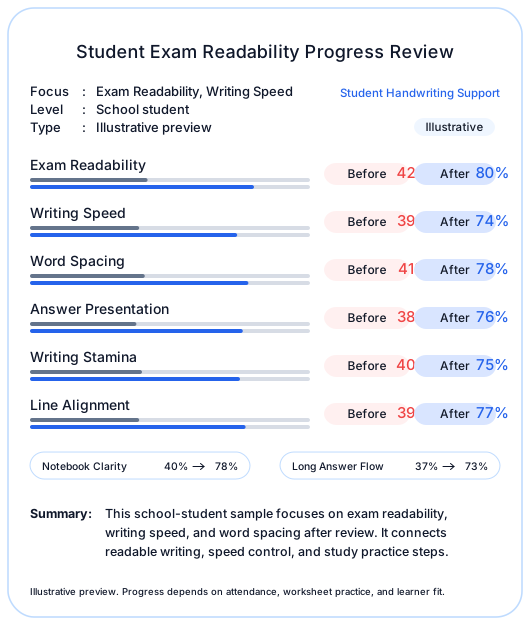
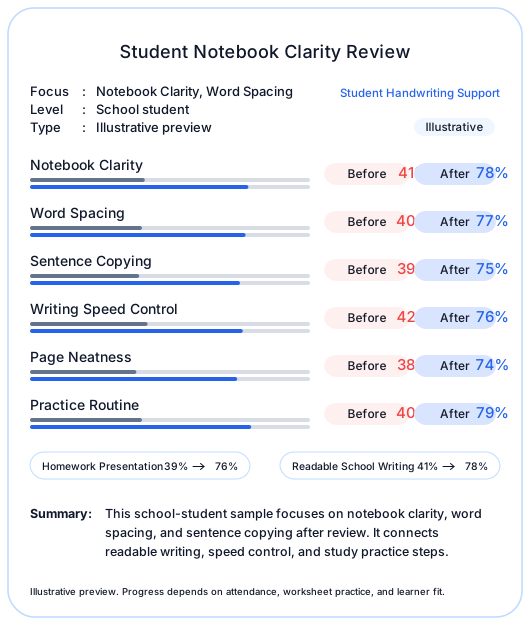
Sample cards focus on pre-teen writing maturity, spacing, cursive flow, line use and clarity as everyday school writing becomes longer.
Pre-Teen Writing Needs This Support Can Address
Pre-teens may need better consistency, spacing, cursive control and writing pace as schoolwork becomes longer.
Useful for learners moving into heavier written work. The focus stays on pre-teen writing needs.
Good when spacing, line use, or consistency still feel unstable. This keeps practice tied to pre-teen writing needs.
Useful when writing demands are increasing but output is not yet steady. The next step stays matched to pre-teen writing needs.
Useful when practice needs to stay practical and age-suitable. This fits pre-teen writing needs. This stays focused.
Pre-Teen Writing Priorities Before More Speed
Pre-teen guidance strengthens spacing, layout and consistency before faster school writing creates avoidable clarity issues.
Practice builds steadier letter size, spacing and line control so handwriting remains consistent from one line to the next.
Layout work improves word gaps, alignment and page balance so notebooks become easier to scan as written tasks grow longer.
Pace awareness helps learners increase speed gradually while keeping letter clarity and writing control steady at school.
Guidance improves notebook presentation so written pages look organised, readable and practical for everyday school use.
Correction reduces frustration by giving the learner one clear target instead of changing every handwriting habit at once.
A repeatable practice rhythm helps learners continue short focused tasks between sessions without random home copying.
How Pre-Teen Handwriting Guidance Usually Begins
Pre-teen support starts with writing, then chooses one useful focus for growing schoolwork and writing demands.
Share ordinary school writing so clarity, spacing and pace can be checked.
Choose readability, writing pace or page presentation as the first target.
Start live guidance only when the format matches the learner’s current needs.
Use worksheets and review notes to repeat the same correction between sessions.
Pre-teen learners are moving into longer schoolwork, so size, spacing and line control should remain steady before speed becomes the main target.
- First check whether letter size, word spacing and baseline placement remain reasonably stable across a full paragraph rather than only a short careful line.
- When cursive joins are introduced, keep only joins the learner can read back easily; unclear joining should not be treated as successful faster writing.
- Short correction-focused practice is usually more useful than copying many pages when the same formation, spacing or line-use error continues throughout.
- Once formation and spacing are steadier, practise longer school-style writing so useful pace can improve without sacrificing readability or page control.
Pre-teen support strengthens spacing, consistency, pace and notebook presentation through structured practice and review.
Practice sheets reinforce the writing target so formation, spacing or pace can improve through manageable repeated work.
Notebook writing is checked to keep the next correction focus visible and prevent practice from becoming generic repetition.
Short review notes show what to repeat between sessions so useful corrections carry into school writing more consistently.
Support respects school workload while building steadier writing speed, readability and presentation without extra pressure.
Quick guide
Pre-teen handwriting often shifts from basic neatness toward readable speed, paragraph control and more mature school presentation as writing load increases.
Pre-teens often need steadier spacing, line use, writing pace and consistent letter style as school tasks become longer and written presentation matters more.
The focus moves beyond basic formation toward notebook clarity, paragraph writing, readable speed and age-appropriate presentation without forcing a decorative style.
A recent sample helps decide whether neatness, cursive joins, writing pace or presentation should be the first correction priority for the learner.
Can handwriting improve around ages 11 to 13?
Yes. Continued improvement can be supported through clear correction, consistent practice and writing tasks suited to the learner’s school stage.
Should a pre-teen use cursive or print?
Either can work when it remains readable; the useful choice depends on the learner’s current handwriting and actual school-writing requirement.
Build Consistency Before Writing Load Increases
Handwriting classes for pre-teens online can strengthen size, spacing and line control before longer assignments make speed more important.
- Check whether the same letter and spacing pattern stays readable across a paragraph instead of only one line.
- Refine cursive joins only when they improve flow without making letters harder for the reader to recognize.
- After the basic pattern is stable, use longer school-style writing to build a more practical pace steadily.
Pre-Teen Handwriting Support Questions
These answers cover suitability, spacing and consistency, readable pace, worksheets, the free demo and how families can choose a useful first step.
Who is pre-teen handwriting guidance designed for?
It suits learners whose written work is becoming longer and who need steadier letter size, spacing, line use or page presentation before later school demands increase.
Does pre-teen support focus mainly on writing speed?
No. Readable pace can be developed, but consistency, spacing, clear letter forms and controlled page presentation remain equally important at this stage.
Is the first demo free for a pre-teen learner?
Yes. The first demo is free once and helps the family understand the correction style, learner fit and the first writing priority before regular support is chosen.
Are worksheets included in the guided practice?
Yes. Worksheets and sample feedback can reinforce the specific correction found in the review, rather than giving every pre-teen the same practice sequence.
Should a family start with a sample or the free demo?
Either route can work. A natural writing sample gives quick evidence, while the free demo also shows how live correction is explained and followed in practice.
Can we ask for a writing review before joining regular support?
Yes. You can Send a Writing Sample first when you want the current writing checked before deciding on the next guidance step.
Start with a free demo or writing sample so pre-teen guidance can match the learner’s present writing habits and school needs.


