
Parent-Child Support for Early Handwriting Habits
Parent-child early handwriting support helps younger learners build steadier writing habits with guidance for both child and parent. Current writing is reviewed first, then short practice focuses on formation, spacing, control and consistency at a pace matched to learner comfort.
- Young learner and parent support
- Formation, spacing and control
- Parent-supported guided practice
- Short practice between sessions
- Flexible pace for learner comfort
- Early writing consistency first
| Format | : | Guided early-writing support |
|---|---|---|
| Learner | : | Young learners building writing habits |
| Parent | : | Parent-supported guided practice |
| Early | : | Focus on early writing consistency |
| Writing | : | Formation, spacing and control |
| Practice | : | Short guided practice between sessions |
| Review | : | Current writing checked first |
| Pace | : | Guidance matched to learner pace |
| Materials | : | Books and handwriting practice toolkit |
| Support | : | Follow-up guidance as suitable |
Early Handwriting Guidance with Parent Support
Young learners can build basic writing control through short guided practice, with parent support at home. Parent-child handwriting support can begin with simple shared routines; online parent child handwriting support keeps feedback practical from home, while early handwriting support for kids focuses on age-suitable control.
- Early support may focus on comfortable pencil use, letter shape, size, baseline control and spacing before asking the child to write faster or longer.
- Parents receive a clearer idea of what to practise between sessions so home practice reinforces the trainer’s current correction priority.
- The pace stays age-suitable and flexible, helping the learner build steadier writing habits without turning early handwriting practice into pressure.
Parent-Child Early Writing Review Samples
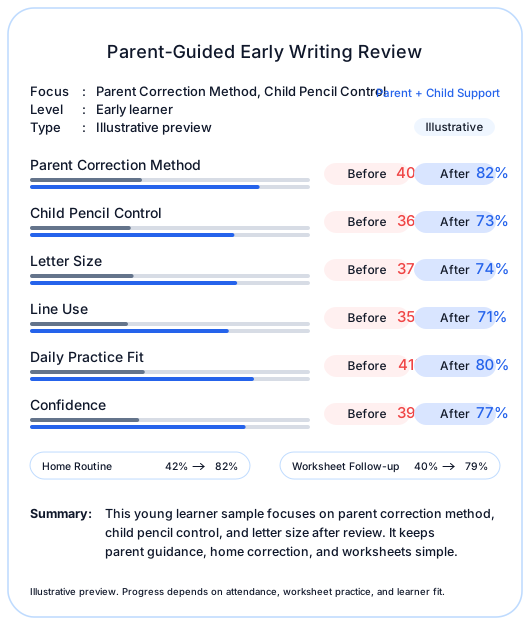
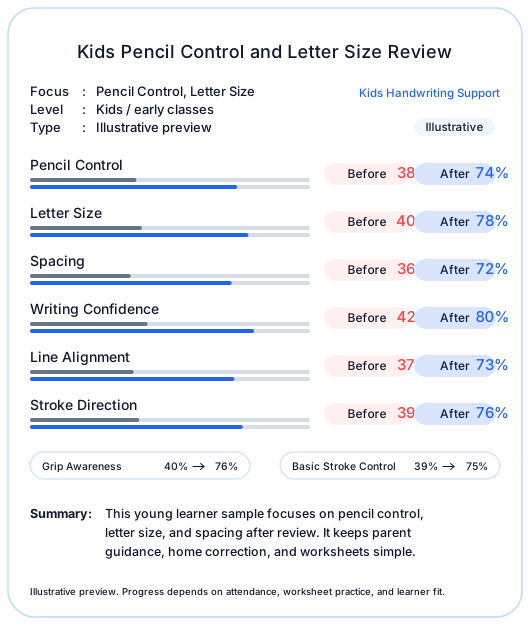
Sample cards show early-writing priorities where parent guidance supports formation, spacing, control and clear practice between sessions.
Who Benefits from Parent-Supported Early Practice
Early support suits younger learners who need simple foundations and a parent who can reinforce short guided practice at home.
Useful for children at an early handwriting stage. This keeps practice tied to early writing support.
Good when parents want simple instructions for home follow-up. This keeps practice tied to early writing support.
Useful when writing readiness and early habits still need support. The next step stays matched to early writing support.
Good when light repeated practice works better than long sessions. This fits early writing support. This stays focused.
Early Writing Priorities with Parent Support
Early support keeps formation, confidence and home follow-up simple so younger learners can practise calmly with a parent.
Early practice builds formation, spacing and writing-control habits before unclear patterns become harder to change.
Parents receive clear follow-up points so short home practice can repeat the trainer’s correction without adding pressure.
A calmer pace keeps practice manageable for younger learners, using short steps and repetition instead of heavy worksheets.
Guidance supports writing confidence and readiness so learners can approach tasks with less hesitation and more control.
How Parent-Supported Early Guidance Begins
Early guidance starts with the child’s current writing and a simple parent role so home practice stays manageable.
Use a sample or demo to find the early writing habit needing attention first.
Set simple parent reminders without making home practice constant correction.
Start live support only when the review shows the pace and format fit the child.
Use simple worksheets and feedback so one clear habit can be repeated at home.
Early support keeps parent involvement practical, helping the child repeat simple writing habits without turning home practice into pressure.
- Parent involvement can support the routine, but the adult role should remain simple: help with practice setup, reminders and sharing writing for review.
- Worksheets and correction tasks stay manageable so the child can repeat one useful habit instead of facing long copying sessions with several targets.
- The guidance tone should remain warm and realistic, especially when the child needs more time to build formation, spacing or basic writing control.
- The next support step is confirmed after review or demo so the family can see whether regular guidance, gentler pacing or another route fits better.
- Use a writing-sample review for early-stage clarity or the Demo Session page when the parent wants to understand the first guided step before joining.
Early support combines gentle learner practice with parent follow-up so writing habits improve without pressure at home.
Parents receive one simple focus to repeat at home so early writing correction stays consistent through short practice.
Short age-suitable tasks build formation, spacing and control while keeping the pace manageable for the learner’s readiness.
Review feedback helps parents understand what to reinforce and what not to over-correct between live guidance sessions.
The review or demo checks whether this support format matches the child’s writing stage before guidance is recommended.
Parent-child support can focus on early writing readiness when families notice uneven control before handwriting becomes a larger school concern.
- Parents may notice uneven letter attempts, numbers or simple-word writing before the child has stable control across short everyday writing tasks.
- Early practice can include pencil hold, hand-eye coordination, line work and letter formation while keeping activities simple and developmentally manageable.
- Families can use short home activities such as line practice or simple list writing, with guidance focused on calmer formation and spacing habits.
Helpful guide
Young children need gentle, age-appropriate writing readiness support before handwriting becomes a stressful routine.
Young children may need gentle support with pencil control, sitting posture, basic strokes, letter formation, and confidence. CursiveClasses.in can guide parents with simple practice steps.
Parent-child support works best when practice is short, calm, and age-appropriate. The goal is not pressure, but steady writing readiness and better control.
Early support may help if a child avoids writing, struggles with letter shapes, or needs guided practice before formal handwriting improvement classes. Parent-child early writing guidance can include pre writing support for kids and young learner handwriting guidance when the child needs age-friendly starting routines.
Is early writing guidance suitable for every child?
It needs to be gentle and based on the child’s readiness, attention, and comfort.
Can parents help during practice?
Yes. Parent involvement can help when guidance is simple and practice is not forced.
Does early support mean heavy worksheets?
No. Short and calm practice is usually better for young children.
Keep Parent-Assisted Handwriting Practice Simple
Early support works best when the parent watches one clear correction cue at a time instead of trying to teach every handwriting rule during home practice.
- Begin with comfortable pencil use, clear basic letter shapes and simple spacing that match the child’s present writing stage.
- Keep practice short enough to protect attention and control, stopping before fatigue turns the activity into rushed repetition.
- Parents can repeat the trainer’s simple cue between sessions, while broader developmental or medical concerns should go to an appropriately qualified professional.
Early Writing Guidance Questions
Short answers about fit, support style, and the next step.
Is this mainly for younger learners?
Yes. It is designed for early-stage handwriting support.
Will a parent usually need to help?
Usually yes, but in a practical and easy-to-follow way.
Is the demo one time and free?
Yes. The first-step demo is free.
Are worksheets included?
Yes. Worksheets and feedback are included in the support flow.
Is the approach gentle?
Yes. The support option is designed to stay warm, simple and practical for younger learners and parent-supported routines.
Can I contact support before joining?
Yes. You can Send a Writing Sample first if you want the starting support level reviewed.
Book a free demo session or send a writing sample if you want to check whether early writing guidance is the suitable.


