
Speed Writing Classes for Clear and Readable Writing
Speed-writing training aims to build faster readable handwriting without sacrificing clarity, spacing or presentation. Current writing speed is checked first, then personalized practice targets timing, movement and consistency for exams, notes, study or everyday writing.
- Readable speed is the main goal
- Speed without losing clarity
- Current writing speed checked first
- Practice for time-bound writing
- Useful for exams, notes and study
- Correction based on actual writing
| Focus | : | Readable handwriting at better speed |
|---|---|---|
| Speed | : | Build speed without losing clarity |
| Clarity | : | Readable letters while writing faster |
| Timing | : | Practice for time-bound writing needs |
| Practice | : | Guided speed and writing practice |
| Review | : | Current writing speed checked first |
| Method | : | Correction based on actual writing |
| Materials | : | Books and handwriting practice toolkit |
| Duration | : | Generally 2-3 months |
| Support | : | 3 months free guidance after course |
Build Writing Speed Without Losing Readability
Speed practice is useful only when the learner can write faster while keeping letters, spacing and answers easy to read. Online speed writing classes focus on readable pace, while handwriting speed improvement classes build rhythm without sacrificing clarity.
- Current writing is reviewed first to see whether slow pace comes from formation, spacing, movement, hesitation or another visible writing habit.
- Timed practice can then target smoother movement, simpler consistent forms and clearer answer layout without encouraging rushed or messy writing.
- For students, speed work can support notes and exam answers; for other learners, it can improve everyday pace while preserving legibility.
Speed practice is useful only when the learner can write faster without losing clarity, spacing, line control or answer.
- The trainer can first check the learner’s current pace and identify where faster writing begins to reduce letter shape, spacing or readability.
- Timed practice can then be introduced gradually, with correction focused on movement, consistency and page control rather than speed by itself.
- For students, the goal may be clearer timed answers or notes; for adults, it may be practical faster writing that still remains easy to read.
Readable-Speed Writing Review Samples
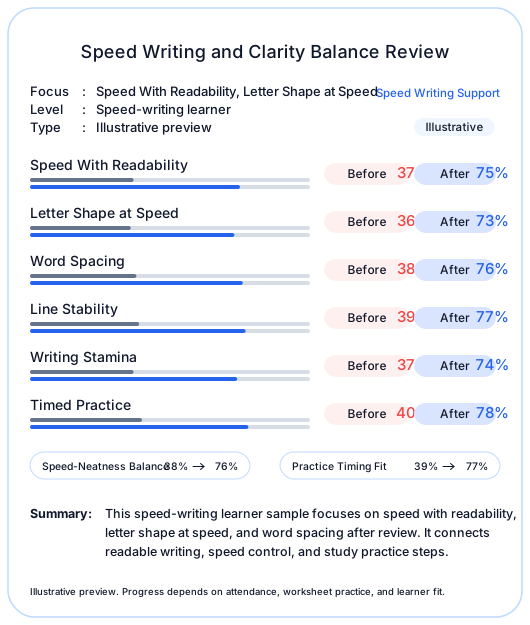
Sample cards show how pace can be reviewed with letter clarity, spacing and page control instead of treating speed as the only goal.
Who Benefits from Readable-Speed Practice
Speed practice helps when output is too slow or clarity drops under pressure, with drills guided by current handwriting.
Guided pace work helps slow writers increase usable output while keeping letter shape, spacing and legibility dependable.
Timed practice supports learners who feel rushed in school or exams by building a steadier pace without sacrificing clarity.
Correction protects clarity as speed rises, reducing messy letter shapes and crowded spacing that appear under pressure.
Structured drills give pace practice a clear rhythm, using short timed tasks and review instead of random repetition.
Readable Speed Priorities for Faster Writing
Speed support develops pace alongside legibility, spacing and control so faster writing remains useful in real tasks.
Readable Speed Writing Control
Practice can build rhythm and line movement while checking letter shape, spacing and page clarity at faster pace.
Student Pace Practice Support
For students, guided speed work can target slow notes or answers while protecting neatness and readable presentation.
Writing Skills Behind Readable Speed and Stamina
Speed guidance works on movement, spacing and endurance together so faster writing remains readable during real timed tasks.
Increase writing pace gradually while checking letter shapes and spacing stay readable instead of encouraging rushed output.
Compare normal and faster samples so speed gains do not come at the cost of recognisable letters or clear word boundaries.
Develop smoother movement across words and lines so the learner spends less effort on stop-start writing during longer tasks.
Protect word gaps, line placement and page balance when pace increases so written work stays easy to follow and review.
Use realistic timed practice to make school, study or exam-style writing more manageable without forcing uncontrolled speed.
Build steadier output across longer tasks so clarity, spacing and movement hold beyond the first few lines of writing.
How Readable Speed Guidance Gets Started
Speed support checks what breaks down as pace increases, then builds practice that protects clarity and writing rhythm.
Start with a writing sample or free demo so speed can be judged with clarity, spacing and line control.
Decide whether the main need is speed alone or speed with better clarity, spacing or presentation.
Live drills build smoother movement and pace while the trainer checks faster writing stays readable.
Later samples compare pace and legibility before increasing practice, so faster writing keeps control.
Pace-control support begins with a review so faster writing is developed only where readability, spacing and letter control can remain stable.
- A speed writing course should start with a review-first check so the pace goal matches the learner’s current clarity and control.
- Use live guided practice with structured pace drills and realistic written tasks instead of isolated speed exercises alone.
- Match worksheets and feedback to the learner’s present pace, spacing and readability rather than using one fixed drill set.
- Use the free demo or a writing sample to confirm whether pace, clarity or another writing issue should lead the learning path.
- Next pages: Send a Writing Sample for pace-related review, or Demo Session for the first guided step.
Readable-speed work combines rhythm, spacing, simplified movement and timed writing so pace improves without sacrificing clarity.
Learners normally begin written work more within the same time window within pace-control training.
written work movement often becomes steadier and less stop-start within pace-control training.
The goal is practical readable speed, not messy rushing within pace-control training.
Families know what to repeat between sessions within pace-control training.
Helpful guide
Readable-speed guidance improves pace without treating rushing as progress. Timed practice, rhythm, spacing and simpler movement are reviewed together so written work remains clear.
CursiveClasses.in may help students build faster readable handwriting. The guidance may include rhythm, spacing, letter simplification, line control, and timed practice. A faster style should be trained with readable letter shortcuts, better rhythm, and line control rather than simply pushing the child to rush.
Many students write faster but lose clarity. A good pace plan improves output step by step while protecting readability and presentation. To improve handwriting speed, the learner needs timed practice, correction of slow letter patterns, and review of presentation under pressure.
Speed practice is useful when a student struggles to finish written work on time. The routine should match class level and written workload, using timed writing, feedback and readable movement patterns. Pace is valuable only when clarity and answer presentation remain stable under realistic pressure.
Can pace control improve without messy handwriting?
Yes. Speed should be increased gradually while checking readability.
Who needs speed practice guidance?
Students who cannot finish written work on time or lose clarity while writing quickly may benefit.
Is speed practice only for exams?
No. It may also help with notes, assignments, and daily school written work.
How may a student build pace control?
Start by checking slow letter habits, spacing, grip comfort, and timed written work samples, then practise with review.
Is fast handwriting useful if it becomes messy?
No. Speed should improve together with readability, otherwise marks and presentation may suffer.
Increase Pace Without Hiding a Readability Problem
Speed practice is useful only when the writing remains readable enough to serve its real purpose.
- If letters or words become unclear as pace rises, first stabilize the specific formation, spacing or joining habit that is breaking down.
- Increase speed in small steps and compare longer samples, because a short line may look stable while a full answer becomes crowded.
- A sustainable pace with readable output is a better target than the fastest possible writing with poor legibility.
Speed Practice Questions
Short answers about fit, guidance style, and the next step.
Is this only for exam written work?
No. It helps any learner who needs faster written output in a readable way.
Will this sacrifice neatness?
No. The goal is to improve pace without losing too much clarity.
Is the first speed-writing demo free?
Yes. The first speed-writing demo is free and checks whether pace work is appropriate without reducing readability.
Are speed practice worksheets included?
Yes. Focused worksheets and feedback are part of the program flow.
How do I know if this support fits?
The free demo or a written work sample usually shows whether pace is the main issue or part of a wider handwriting need.
Can I send a speed-writing sample before the demo?
Yes. A current sample written at the pace where clarity changes can help identify whether speed work is the right first target.
Use a free demo or writing sample produced at the learner’s normal pace to check whether speed work is appropriate without reducing readability.


