
Handwriting Improvement Results and Writing Samples
Handwriting results are best seen by comparing earlier writing with later samples after guided online practice. Changes may appear in spacing, clarity, neatness, cursive flow, speed and presentation, while progress varies with starting level, learner fit and practice consistency.
Progress is reviewed through visible writing markers such as neatness, spacing, line balance, control, and page presentation.
- Compare before and after writing
- Real writing samples show change
- Spacing, clarity and neatness
- Readable speed may improve
- Results vary by learner and practice
- Starting level affects progress
| Samples | : | Before-and-after writing examples |
|---|---|---|
| Compare | : | View visible handwriting changes |
| Focus | : | Spacing, clarity, neatness and speed |
| Review | : | Progress is reviewed from real writing |
| Progress | : | Results vary by learner and practice |
| Practice | : | Guided practice supports improvement |
| Learners | : | Examples may cover different learners |
| Method | : | Training follows current handwriting |
| Support | : | Post-course guidance supports consistency |
| Start | : | Send a sample for your own review |
How to Read Handwriting Progress Samples
Progress samples show visible changes in actual writing, but results should be judged from the learner’s starting point. Handwriting before and after comparisons are most useful when similar writing tasks are reviewed, and handwriting improvement before and after examples should be read as individual progress rather than guaranteed outcomes.
- Before-and-after writing can reveal changes in spacing, clarity, cursive flow, line control, readable speed and overall page presentation.
- Improvement is not identical for every learner because starting habits, correction needs, practice consistency and training fit can differ.
- The most useful comparison is whether later normal writing shows clearer, more consistent habits rather than whether it matches a decorative sample.
Progress should be judged from changes in real writing over time rather than from a promised result after a fixed number of sessions.
Useful comparisons can look at letter clarity, spacing, alignment, cursive flow, readable pace and page presentation in earlier and later writing.
The amount and speed of improvement depend on starting level, learner fit, attendance, guided practice, feedback and consistency between sessions.
Before-and-after samples can illustrate change, but they should not be treated as a guarantee that every learner will produce the same outcome.
How to Read Handwriting Progress Samples
Sample cards compare visible changes in spacing, clarity, flow and presentation without implying the same result for every learner.
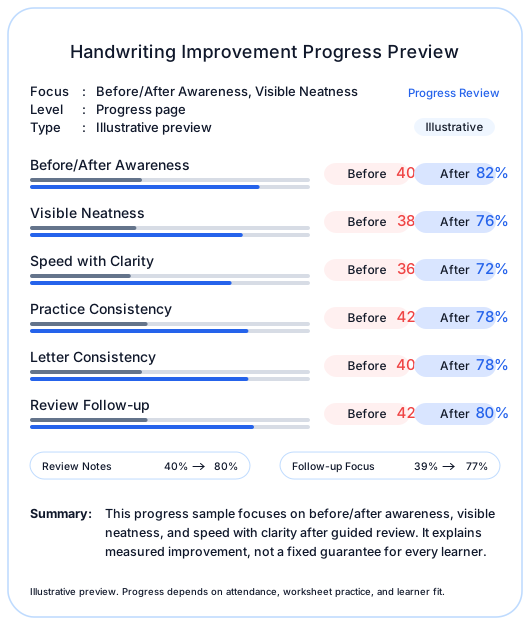
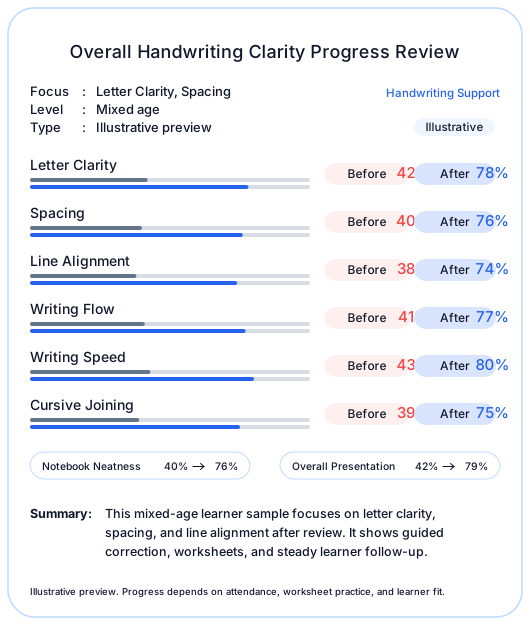
How to Read Handwriting Progress Examples Carefully
Progress examples show possible changes and are illustrations, not promises of the same outcome for every learner.
- Cleaner overall appearance — writing may begin to look calmer, less crowded and easier to scan as the learner applies corrections more consistently.
- More balanced spacing — letter and word gaps may become steadier, making lines easier to read without forcing every sample to look exactly the same.
- Stronger baseline control — writing may sit more evenly across the line as repeated practice improves placement and reduces avoidable vertical drift.
- Clearer presentation — joins, strokes and page layout may become more organised when practice targets the issues identified in the learner’s own writing.
- These examples remain illustrative; actual improvement depends on learner fit, starting handwriting, practice consistency and response to live guidance.
Handwriting Progress Markers to Review
These markers compare writing samples over time while keeping progress illustrative and avoiding promises of identical learner outcomes.
| Marker | What to review | What positive change may look like |
|---|---|---|
| Neatness | How settled and organised the whole page appears | Cleaner words, less crowding and a steadier overall page |
| Spacing | How consistently letters, words and lines are separated | More readable gaps with fewer crowded or unusually wide spaces |
| Line balance | How steadily writing sits and moves across each line | Straighter flow with fewer sudden rises, drops or uneven lines |
| Letter control | How consistently letter shapes, size and strokes repeat | More stable shapes and size with fewer confusing forms |
| Flow and joins | How smoothly connected writing moves where joins are used | Cleaner joins and a more even rhythm while staying readable |
| Readable speed | How clearly the learner writes while increasing useful pace | Better balance between writing speed, letter clarity and control |
What Can Change the Pace of Improvement
Handwriting progress varies with starting level, learner stage, practice quality and consistency, so sample comparison matters more than fixed timelines.
- Starting level matters because some learners need one small correction while others need several habits rebuilt before the writing becomes consistently clearer.
- Learner stage changes the goal: younger children may need foundations, while older students and adults often need clarity, pace or presentation under real use.
- Practice quality matters more than random repetition because short tasks linked to trainer feedback give the learner a clearer habit to repeat between reviews.
- Consistency is easier to evaluate when worksheets, live sessions and fresh samples are frequent enough to show whether a correction is holding.
This sample comparison shows how handwriting change can be reviewed without promising identical results or exposing learner data.
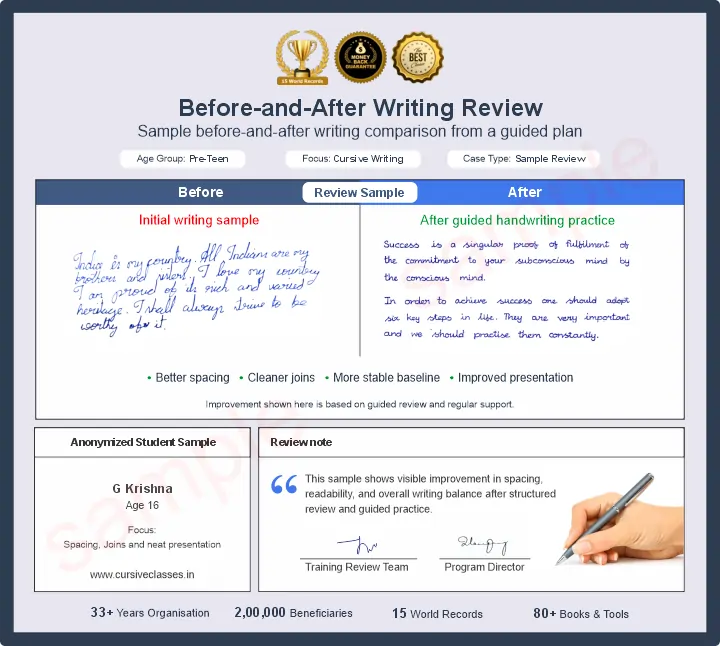
Progress examples are most useful when they explain visible writing changes instead of treating a before-and-after image as a guaranteed outcome.
- Handwriting progress can be reviewed through clearer spacing, steadier letter control and more readable everyday written output over time.
- Before-and-after samples are easier to interpret when the review explains changes in letter size, line balance, spacing and page clarity.
- The useful result is steadier readable writing that carries into normal tasks; sample progress should not be treated as an identical promise.
Quick guide
This guide explains handwriting progress outcomes honestly, with sample progress language, realistic limits, and the factors that affect change.
Handwriting progress can include more readable letter shape, better spacing, improved alignment, smoother cursive flow, better speed control, and more readable notebook or exam writing.
Results depend on the learner’s starting level, age, attention, attendance, worksheet completion, practice consistency, and how long the writing habit has been present.
Before-and-after sample comparisons and progress examples need to be treated as illustrative unless they are real learner records with permission. The goal is to show the type of improvement reviewed, not to promise identical results.
Some learners need extra time when writing habits are deep, speed pressure is high, or practice between sessions is irregular.
Review a writing sample first to understand what result is realistic for that learner.
How much may handwriting improve?
Many learners can improve readability, spacing, and consistency, but the level of change depends on practice and starting point.
How long does handwriting improvement take?
It varies. Awareness of mistakes may improve first, while speed and habit change normally take longer.
Can poor handwriting be fully corrected?
Some learners improve strongly, but no fixed guarantee is safe. The realistic goal is steady, readable improvement.
What results can parents expect first?
Parents often notice better mistake awareness, clearer spacing, and more controlled letters before major speed improvement.
How to Interpret Handwriting Progress Examples
Before-and-after examples can illustrate the kind of change being practised, but they should not be treated as a promise that every learner will progress identically.
- Compare similar tasks, paper and writing pace where possible so differences in clarity or spacing are not caused mainly by a different writing condition.
- Look for specific changes such as clearer forms, steadier word gaps, more consistent size or a better readable pace rather than relying on one overall score.
- Actual progress depends on the starting pattern, practice consistency, learner comfort and whether the correction transfers into ordinary school, study or daily writing.
Results FAQ
Quick answers about how handwriting results are usually reviewed.
Are handwriting results guaranteed?
No fixed result is guaranteed. Progress depends on learner fit, attendance, practice consistency, feedback follow-up, age, and starting handwriting level.
What result is usually seen first?
Many learners first show improvement in neatness, spacing, line balance, and overall written presentation.
Does everyone improve at the same speed?
No. The pace depends on the starting level, learner stage, practice consistency, and how follow-up is done.
Can progress be shown without sharing private learner details?
Yes. Progress can be shown through privacy-safe before after writing samples, review previews, and simple marker-based explanation.
Does this page promise fixed results?
No. The guidance explains realistic progress markers, sample-based improvement, and how they are reviewed. It does not make guaranteed-results claims.
Use these related pages when you want to compare progress evidence, program options and the next practical support route.
- Read How CursiveClasses.in Works for the full free-demo, learner-fit, and payment-after-confirmation process.
- See handwriting review to understand how the current writing is assessed.
- Compare guidance options on the programs page.
- Book a demo session if you want to start with live guidance.
- Use the contact page if you need help choosing the next move.
Use a current sample or the free demo to understand the next correction direction after reviewing progress markers and realistic writing changes.


