
Personalized Handwriting Classes for Students
Student handwriting training focuses on clearer daily school writing, consistent spacing, neatness, readable speed and better answer presentation. Current school writing is reviewed first so personalized live guidance can target habits affecting notebooks, classwork and exams.
- Daily school writing is the focus
- Neater, more readable writing
- More consistent spacing
- Useful readable writing speed
- Clearer written-answer presentation
- Current school writing reviewed first
| Learners | : | Students improving daily school writing |
|---|---|---|
| School | : | Clearer writing for schoolwork |
| Neatness | : | Cleaner and more readable writing |
| Spacing | : | More consistent spacing |
| Speed | : | Readable writing at useful speed |
| Answers | : | Better written-answer presentation |
| Review | : | Current handwriting checked first |
| Materials | : | Books and handwriting practice toolkit |
| Duration | : | Generally 2-3 months |
| Support | : | 3 months free guidance after course |
Handwriting Support for Daily School Writing
Student guidance connects neatness, readable speed and answer presentation with everyday school writing. Online handwriting classes for students can address school writing demands, while handwriting improvement classes for students are planned from current samples and class-stage needs.
- Current school writing is reviewed to identify habits affecting formation, spacing, line use, cursive flow, clarity or writing pace in daily tasks.
- Practice can then focus on cleaner notebook work, more readable answers and useful speed while keeping correction appropriate to the student’s class level.
- Because school demands change with age, the learner’s class page gives more specific priorities for early writing, longer answers and exam work.
Student training should connect handwriting correction with notebooks, written answers, study notes and the pace needed for.
Current school writing can show whether formation, spacing, alignment, cursive flow or page presentation is affecting everyday readability.
Practice can then target the most important issues while gradually building a useful pace for classwork, homework, notes or written answers.
The training remains personalized to the student’s actual writing and class demands instead of treating every learner as needing the same cursive course.
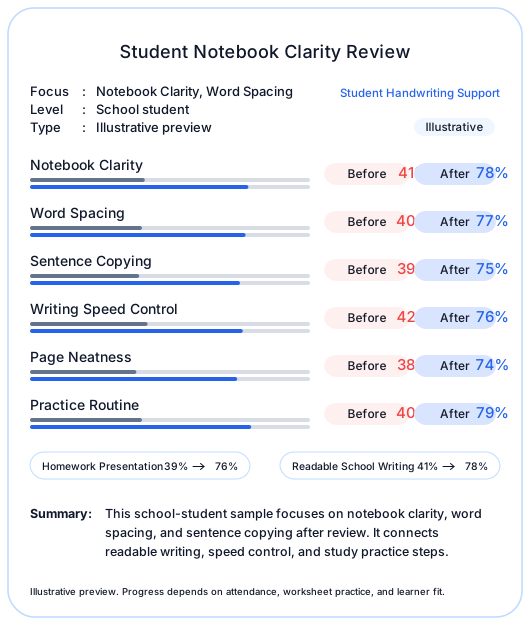
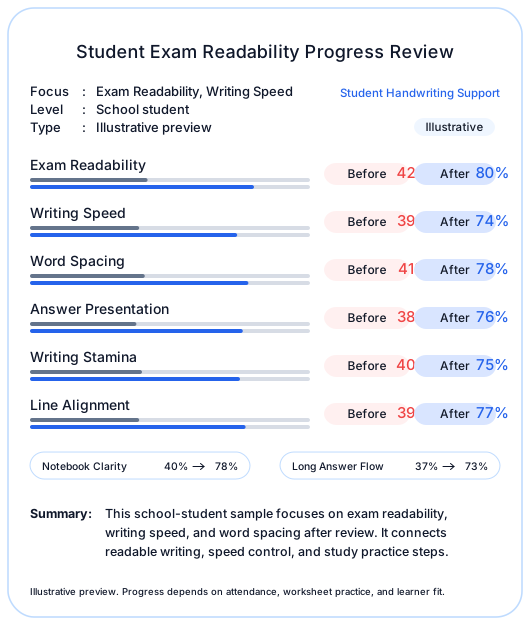
Student School-Writing Review Samples
Sample cards focus on student spacing, notebook clarity, answer presentation and readable pace across everyday schoolwork.
Student Writing Needs for Guided Practice
Student support can address notebook neatness, readable output and writing pace through review-led practice for schoolwork.
School writers can improve letter clarity, spacing and pace so daily notebooks and answers become easier to maintain.
Notebook guidance improves alignment, spacing and page balance when work looks untidy even though the content is understood.
Practice helps when output is slow or uneven, using review-led correction to build a steadier rhythm for school tasks.
Families receive correction priorities so home follow-up is based on the writing sample rather than general guesswork.
Student Writing Priorities for School Work
Student guidance connects cursive, neatness, spacing and speed with real notes, homework and answers.
Student Cursive Flow Support
Cursive work can improve joins, word flow and spacing while keeping the student’s notebook writing clear and practical.
Student School-Writing Practice
Practice can use real notes, homework and answers to strengthen letter clarity, alignment, spacing and page organisation.
Student Handwriting Improvement
A sample review identifies habits that affect neatness or readability, then guided tasks focus on those priorities first.
Student Readable Speed Support
Speed practice can help with longer notes and timed answers while keeping words legible, spaced and organised.
Student Handwriting Priorities for School Use
Student guidance focuses on writing habits affecting notebooks, classwork and answers while keeping practice age-appropriate.
Improve formation and repeatable letter shapes so daily notebook writing and written answers are easier to read consistently.
Build clearer gaps between letters and words so sentences look less crowded and remain easier to follow across the page.
Strengthen line use, margins and layout so school pages look organised without turning handwriting into decorative lettering.
Increase useful writing speed while checking that letter clarity, spacing and line control remain stable during classwork.
Reduce uneven rises, drops and drifting baselines so longer written work stays visually steadier from line to line.
Use guided correction and manageable practice so everyday writing tasks feel clearer and less difficult to continue.
How Student Handwriting Guidance Gets Started
Student guidance starts with school writing, identifies one priority and uses live correction with focused follow-up practice.
Use a recent notebook page or free demo to review the student’s clarity, spacing, pace and presentation.
Choose the first priority from letter clarity, readable speed, spacing or page organisation after review.
Live guidance explains the chosen correction and connects practice with everyday school writing.
Focused worksheets and review notes help the student repeat the same correction between live sessions.
Readable student writing can still be impractical when classwork or answers take too long, so the review must check what changes as pace increases.
- When student writing stays clear only at a slow pace, practise smoother movement and rhythm before asking the learner simply to write faster.
- If faster student writing becomes crowded or smaller, stabilise spacing and letter size first, then increase pace gradually through realistic tasks.
- Use a natural notebook or timed-answer sample because carefully copied writing can hide the problem that appears during ordinary schoolwork.
- The student goal is sustainable readable output at a useful pace, not maximum speed that makes answers or notes harder to read.
Student support tools connect sample review, guided practice, feedback and class-appropriate writing goals without treating every learner alike.
Practice sheets matched to present school-stage needs within student handwriting support.
Writing may be checked again to keep the correction focus clear within student handwriting support.
Short follow-up guidance for the learner and family within student handwriting support.
Guidance stays easier to follow because the priorities stay visible within student handwriting support.
Quick guide
Student handwriting guidance should support notebook readability, answer presentation, spacing, alignment and useful writing speed at the learner’s actual class level.
Students often need handwriting guidance when schoolwork is readable only with effort, writing pace is low, spacing is uneven, or exam answers look untidy even when the content is correct.
The first correction is based on the writing sample. Some students need letter formation, some need spacing and alignment, and others need speed control without losing readability.
Neat handwriting for students should support clear answer presentation, notebook clarity and a steady written pace rather than focus only on beautiful letters.
Worksheets may be matched to the student’s class level and reviewed in live sessions or through shared samples so repeated mistakes are corrected early.
Send a writing sample or book a free demo to identify the first priority before choosing a learning path.
How can students improve handwriting speed?
Writing speed improves gradually when formation, spacing, grip comfort, and writing rhythm are corrected together instead of pushing speed alone.
How can students write neatly in exams?
They need readable letter size, consistent spacing, line control, and answer presentation practice under realistic written pace.
Is cursive useful for school students?
Cursive can help some students write with flow, but it should not reduce readability or exam clarity.
How many sessions are needed?
Regular guidance commonly uses 8 sessions per month, but the suitable duration depends on the learner’s issue and practice consistency.
Use School Writing, Not Only Copywork, to Judge Progress
Student handwriting should remain readable in the tasks that matter: notes, homework, classwork and exam answers.
- Review a normal school sample to identify whether letter clarity, spacing, baseline control or pace is the first practical problem.
- If the student writes neatly only when very slow, practise the same corrections in gradually longer school-style tasks.
- Handwriting improvement for students should be judged by whether corrections hold in normal written work, not only in one carefully copied worksheet.
Student Page Questions
Common questions about student handwriting fit, school-writing goals, live guidance and the joining process.
Can students start without paying first?
Yes. Students can start with the free demo or writing sample review. Payment is requested only after the team confirms the suitable support path.
Who is this page mainly for?
It is mainly for school students who need clearer daily writing and better written presentation.
Does it help with slow writing too?
Yes. Pace control can be part of the guidance when slow output is a real issue.
Is the first student handwriting demo free?
Yes. The first student demo is free and helps identify a practical school-writing target before regular guidance.
Will worksheets be included?
Yes. Worksheets and review guidance are part of the guided flow.
Do I need a review before joining?
A review or demo is usually the clearest first step because it helps match the guidance to the learner.
Can I read more before joining?
Yes. The Course Guide can help compare learning paths first.
Use the process guide when you want the student demo, learner-fit review and payment-after-confirmation steps explained before joining.
- For handwriting classes for students online, read How CursiveClasses.in Works to see how current school writing, demo fit and regular live guidance are reviewed.
Book the free demo or send a current writing sample so the first guidance priority reflects the student’s real classwork and writing load.


