
Handwriting Classes for Class 3 – Live 1:1 Personalized Training
Class 3 handwriting training develops smoother cursive joins, consistent letter size, better word spacing and neater sentence writing. Current schoolwork is reviewed first, then live personalized practice improves flow, alignment and writing consistency in everyday notebook work.
- Smoother cursive joins
- Consistent letter size and spacing
- Neater sentence writing
- Better baseline and alignment
- Improved writing flow
- Consistency across notebook work
| Class | : | Class 3 students |
|---|---|---|
| Cursive | : | Cursive joining and smoother flow |
| Joins | : | Clearer letter joins |
| Spacing | : | More consistent word spacing |
| Neatness | : | Cleaner everyday school writing |
| Control | : | Steadier writing control |
| Review | : | Current school writing checked first |
| Materials | : | Books and handwriting practice toolkit |
| Duration | : | Generally 2-3 months |
| Support | : | 3 months free guidance after course |
Class 3 Cursive Joins and Sentence Flow
Class 3 training develops smoother joins, consistent spacing and neater sentence writing as cursive use becomes more regular.
- Practice focuses on clearer joins between letters while protecting letter shape, spacing and baseline alignment so cursive remains readable rather than rushed.
- Sentence work helps the learner keep size and word spacing more consistent across longer lines instead of correcting each letter in isolation.
- The goal is steadier everyday notebook writing, with smoother flow and fewer repeated spacing or alignment problems across normal classwork.
Handwriting Practice for Class 3: Writing Example
Use this short, original Class 3 practice example to work on neat sentences and early cursive control. It is a self-check exercise, not a promise of results or a replacement for trainer feedback.
- Practice writing: “After the rain, our garden looked fresh. Small birds sat near the window, and the children watched them quietly.”
- Write the sample twice: once in your normal handwriting, once with steadier spacing and carefully formed joins where suitable.
- For guidance matched to a real notebook page, send a writing sample or request a free Class 3 demo. The handwriting worksheets guide explains how practice can be supported.
Class 3 Cursive Joining and Sentence-Flow Practice
Class 3 practice should connect clearer joins with spacing, letter size and readable sentence writing in everyday notebook.
Learners can practise smoother joins while keeping individual letters recognizable, with attention to spacing between words and stable letter size.
Sentence practice helps the child carry neatness across several words instead of producing good joins only in isolated letter exercises.
Notebook review can then check alignment, baseline use and writing flow so cursive becomes clearer and more consistent in normal schoolwork.
Class 3 Cursive and Sentence Review Samples
Sample cards highlight Class 3 joins, word spacing, letter-size consistency and sentence flow as everyday notebook writing develops.
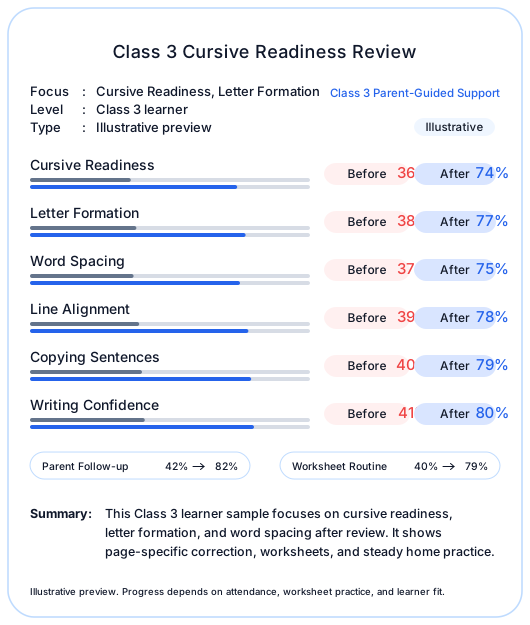
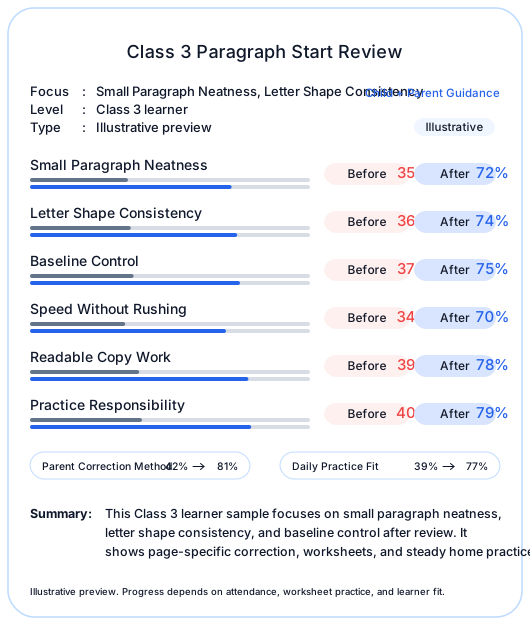
For Class 1-3 learners, parent participation can help keep home practice and correction clear while early writing habits are developing.
Class 3 Writing Priorities Beyond Early Basics
Class 3 guidance builds cleaner joins, steady spacing and consistent notebook work as sentence writing becomes more regular.
Practice moves beyond early habits by improving joins, spacing and letter consistency as sentence work becomes longer.
Guidance keeps schoolwork readable by correcting uneven joins, crowded word gaps and changes in letter size across writing.
Notebook practice builds steadier neatness across several lines so writing does not turn rushed or uneven after one sentence.
Home follow-up uses clear correction points and short practice tasks so families know what to repeat between live sessions.
Class 3 Handwriting Priorities for Daily Writing
Class 3 review targets cursive and sentence flow, choosing one writing habit first so practice stays focused and useful.
Handwriting practice for Class 3 uses live correction and matched practice based on the learner’s current writing.
Class 3 Consistent Letter Size is developed through review-led correction and practice matched to current writing.
Class 3 Sentence Spacing uses guided correction and short practice so the next writing target stays clear.
Class 3 Baseline Stability uses live correction and matched practice based on the learner’s current writing.
Class 3 Notebook Neatness is developed through review-led correction and practice matched to current writing.
Class 3 Writing Flow Practice uses guided correction and short practice so the next writing target stays clear.
Class 3 Writing Skills to Strengthen Next
Class 3 review checks cursive joins, sentence spacing and notebook neatness before selecting one first correction target.
Class 3 Cursive Join Control
Class 3 correction builds this skill so joins stay readable through connected words in regular writing.
Class 3 Letter-Size Balance
Handwriting sentences for Class 3 help this skill develop so letter size stays steadier across regular written sentences.
Class 3 Sentence Spacing
Class 3 correction builds this skill so word gaps support clearer sentence flow in regular writing.
Class 3 Notebook Neatness
Class 3 correction builds this skill so notebook work looks more settled and readable in regular writing.
How Class 3 Handwriting Guidance Gets Started
Class 3 review uses school writing to set the first priority for cursive joins, sentence spacing and notebook neatness.
A recent Class 3 page shows normal school writing and gives a clear first correction target.
The Class 3 review selects one stage-specific priority instead of changing several habits at once.
Class 3 live guidance shows the correction and gives one focused task for the current school stage.
Class 3 follow-up checks whether the correction is stable before moving to the next priority.
Class 3 writing places more demand on cursive joins, spacing and notebook neatness, so correction should match the learner’s actual schoolwork.
- Cursive writing for Class 3 should strengthen cursive joins, spacing and notebook neatness through short tasks that resemble school writing.
- English handwriting for Class 3 improves more consistently when one correction is repeated instead of changing several habits together.
- Progress at Class 3 can be checked through later notebook work, looking for steadier spacing, formation and overall readability.
- The next Class 3 support step is chosen after review or demo because the amount of correction depends on the learner’s present writing.
- For online handwriting classes for Class 3, use Send a Writing Sample for a writing check, or Demo Session for the first guided step.
Class 3 support uses guided practice, sample checks and feedback around joins, spacing and sentence flow, based on the learner’s present writing.
Short tasks for Class 3 are matched to joins, spacing and sentence flow so practice stays connected to the learner’s current correction priority.
Comparable Class 3 writing samples are rechecked to see whether the selected changes are becoming steadier in normal written work.
Feedback for Class 3 explains what to repeat next without adding unrelated handwriting drills that do not match the present need.
Progress review for Class 3 separates early visible gains from later goals and keeps expectations realistic across regular practice.
Helpful guide
Class 3 guidance should match current school writing. The review checks joins, spacing and sentence flow, then selects one correction focus, live practice and a follow-up point. This keeps the plan stage-appropriate and based on the learner’s own writing.
The Class 3 plan begins with ordinary school writing, not a generic copybook sequence. The review checks joins, spacing and sentence flow and other visible habits. From those observations, the trainer chooses a small correction priority that suits the learner’s stage and can be repeated in normal written work.
Practice for Class 3 repeats the correction that most affects readability or useful pace. Live feedback and suitable worksheets are used only where they support joins, spacing and sentence flow. The aim is steady transfer into school writing rather than neatness that appears only on a practice sheet.
Later Class 3 writing is compared with the starting sample to see whether the correction holds across longer work. If the evidence changes, the next priority can change too. The goal is progress in joins, spacing and sentence flow while keeping writing practical and readable for the learner’s stage.
What should handwriting practice focus on in Class 3?
It should focus on joins, spacing and sentence flow when those needs appear in normal Class 3 writing.
Can Class 3 handwriting improve online?
Yes. Class 3 learners can improve online when matched practice, sample review and correction feedback are followed consistently.
Does every Class 3 learner need cursive?
No. Cursive is used in Class 3 only when it suits current writing and the school goal; readability stays first.
Class 3: Carry Good Formation into Longer Sentences
Class 3 practice should reflect real school writing while keeping the correction target focused on cursive joins, spacing, letter size, sentence flow and neatness.
- Review whether letter shapes and spacing stay stable as sentence length increases.
- Introduce smoother joins only where they remain easy to read.
- Use short paragraphs to build a practical writing rhythm without rushing.
Class 3 Questions
These questions explain Class 3 fit, live-online guidance, practice support and next steps while keeping the focus on cursive joins, spacing, letter size, sentence flow and neatness.
Can this help with school notebook writing in Class 3?
Yes. Class 3 guidance can focus on sentence flow, spacing, readable joins and neater notebook work as writing becomes more continuous.
Does Class 3 guidance focus only on cursive?
No. Class 3 support can address overall clarity, spacing, line flow, presentation and writing confidence as well as cursive when relevant.
Is the first Class 3 demo free?
Yes. The first Class 3 demo is free and is used to check the learner’s current writing and guidance fit.
What is the usual Class 3 session rhythm?
A common Class 3 reference is eight live sessions per month, usually about 45 minutes each, with the final plan matched to learner need.
Are Class 3 worksheets and feedback included?
Yes. Class 3 guidance can include selected worksheets, writing checks and feedback tied to the learner’s current correction target.
How is the Class 3 quote decided?
A learner-based Class 3 quote is shared after the review or demo because support depth depends on the present writing pattern and guidance need.
Use a free demo or current writing sample to check the best starting focus for Class 3 cursive joins, spacing, sentence flow and neatness.


