
Handwriting Classes for Class 6 – Live 1:1 Personalized Training
Class 6 handwriting training supports clearer answers, consistent letter size, better spacing, cursive control and readable speed in longer school tasks. Current writing is reviewed first, then live personalized practice targets clarity, flow and notebook presentation.
- Clearer longer school answers
- Consistent letter size and spacing
- Better cursive control
- Readable speed for longer tasks
- Neater notebook presentation
- Stronger writing consistency
| Class | : | Class 6 students |
|---|---|---|
| Cursive | : | Clearer cursive flow |
| Answers | : | More readable written answers |
| Spacing | : | More consistent spacing |
| Speed | : | Useful speed with clarity |
| School | : | Support for growing writing demands |
| Review | : | Current school writing checked first |
| Materials | : | Books and handwriting practice toolkit |
| Duration | : | Generally 2-3 months |
| Support | : | 3 months free guidance after course |
Class 6 Clear Answers and Writing Consistency
Class 6 guidance supports clearer answers, consistent spacing, cursive control and readable speed for longer school tasks.
- The learner practises maintaining letter size and spacing through longer answers so writing stays readable beyond the first few lines of a task.
- Cursive control and smoother movement are developed alongside notebook presentation, helping classwork look clearer without forcing decorative writing.
- Speed work becomes more relevant at this stage, but the aim is useful pace with clarity rather than faster writing that becomes difficult to read.
Handwriting Practice for Class 6: Writing Example
Use this short, original Class 6 practice example to work on longer written answers and readable pace. It is a self-check exercise, not a promise of results or a replacement for trainer feedback.
- Practice writing: “Our class planned a small garden beside the playground. We prepared the soil, selected plants and shared the work fairly. As the plants grew, we measured them and recorded our observations. This project taught us responsibility and patience.”
- Write the paragraph without rushing. Compare the first and final lines for spacing, consistent size and legibility; only then try a slightly quicker second version.
- For guidance matched to a real notebook page, send a writing sample or request a free Class 6 demo. The handwriting worksheets guide explains how practice can be supported.
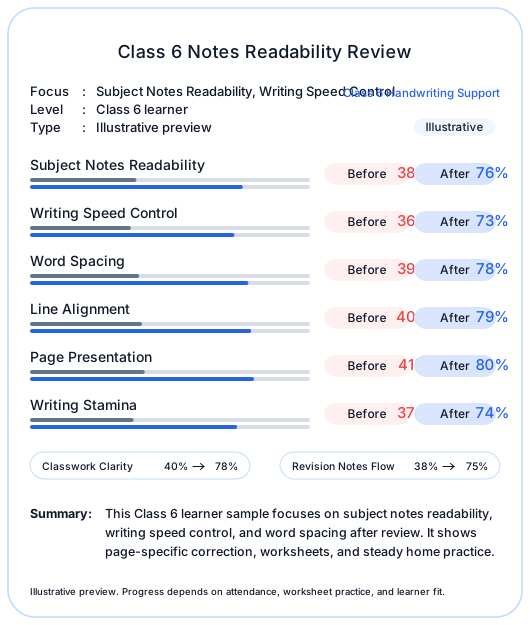
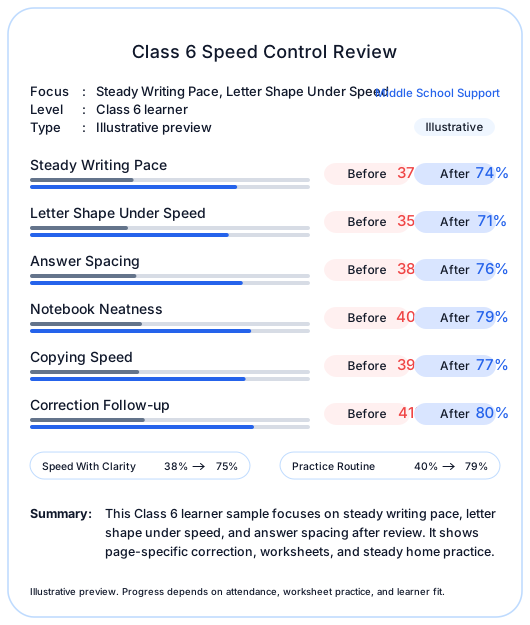
Class 6 Handwriting Review Samples
Sample cards highlight Class 6 priorities such as clearer answers, consistent spacing, cursive control and readable pace in longer school.
Class 6 Writing Needs This Support Can Address
Class 6 learners may need clearer answers, steadier spacing and readable pace as middle-school writing volume increases.
Useful when written work increases and notebook consistency becomes more important. The focus stays on Class 6 writing needs.
Useful when subject writing needs steadier pace, spacing, and line flow. This keeps practice tied to Class 6 writing needs.
Useful when notebook structure and written appearance still change too much. The next step stays matched to Class 6 writing needs.
Useful when correction should match current writing level instead of generic practice. This fits Class 6 writing needs.
Class 6 Handwriting Priorities for Longer Work
Class 6 guidance builds readable speed, clear letters and page structure as subject writing becomes longer and more frequent.
Practice increases writing pace while protecting letter clarity so longer subject answers remain readable throughout.
Line-flow work builds a steadier rhythm across classwork, reducing abrupt changes in size, slant and writing movement.
Spacing practice keeps word gaps even as pace increases, so longer answers stay clear rather than crowded or hard to scan.
Page-structure guidance improves alignment, margins and visual order so notebooks and written answers are easier to review.
Correction protects letter shapes during subject writing so faster output avoids confusion between characters.
Longer tasks build writing stamina while checking that clarity, spacing and page control remain stable through longer work.
Class 6 Handwriting Priorities for Daily Writing
Class 6 review targets longer school writing, choosing one writing habit first so practice stays focused and useful.
Class 6 Clear Answer Writing
Class 6 Clear Answer Writing uses live correction and matched practice based on the learner’s current writing.
Class 6 Consistent Letter Size
Class 6 Consistent Letter Size is developed through review-led correction and practice matched to current writing.
Class 6 Longer-Writing Control
Class 6 Longer-Writing Control uses guided correction and short practice so the next writing target stays clear.
Class 6 Readable Writing Pace
Class 6 Readable Writing Pace uses live correction and matched practice based on the learner’s current writing.
How Class 6 Handwriting Guidance Gets Started
Class 6 uses a free review to check answer clarity, letter consistency and pace before the first support step.
A recent Class 6 sample shows normal school writing and makes the first correction easier to choose.
The free Class 6 demo checks learner fit and demonstrates the most useful first correction.
Class 6 sessions begin with one focused writing target instead of several changes at once.
Class 6 worksheets and feedback repeat the chosen target between live reviews.
Class 6 follow-up checks clear answers, letter size, longer writing and readable pace in normal school writing.
- One page writing in English for Class 6 can balance longer writing with readable pace, consistency and presentation.
- Handwriting sentences for Class 6 can fit the study load while handwriting improvement for Class 6 stays practical.
- Handwriting for Class 6 may improve through steadier notes, clearer answers and better spacing in longer work.
- Cursive writing for Class 6 follows review because cursive control, answer clarity and pace may need separate focus.
- For Class 6, use Send a Writing Sample for a current-writing review, or Demo Session to see the first guided step.
Class 6 support uses worksheets, sample checks and feedback for clear answers, letter consistency and readable pace during normal school writing.
Class 6 worksheets target clear answers, letter consistency and readable pace through manageable practice linked to current school writing.
Fresh Class 6 samples help compare later school writing with the first review before another correction target is added.
Class 6 feedback explains the chosen correction clearly so the learner knows what to repeat between guided sessions.
Class 6 progress review checks whether the writing change is stable enough to continue or move to the next priority.
Helpful guide
Class 6 handwriting guidance should match the learner’s school writing demand and present habits. The review looks at clear answers, size control, cursive control, longer writing and readable speed before deciding which correction deserves attention first and how practice should continue.
For Class 6, the first plan is based on real writing rather than a generic copybook sequence. The review checks clear answers, size control, cursive control, longer writing and readable speed. The trainer then selects a small number of corrections that fit the learner’s stage and everyday written work.
Handwriting practice for Class 6 should stay short and repeatable, with live correction, worksheets and sample checks used only where they support clear answers, longer writing and readable speed.
Later samples are compared with the starting writing so the learner can see whether the chosen correction is holding across longer work. If the evidence changes, the next priority can change too; the goal is steady improvement in clear answers, longer writing and readable speed, not identical handwriting for every learner.
What should Class 6 handwriting practice focus on?
It should focus on clear answers, longer writing and readable speed when those needs are visible in the learner’s normal writing sample.
Can Class 6 handwriting improve through online guidance?
Yes. Online handwriting classes for Class 6 can support improvement when live guidance, matched practice, sample review and correction feedback are followed consistently.
Is cursive required for every Class 6 learner?
No. Class 6 cursive practice is used only when it suits current writing, school needs and the learner’s goal; readability stays first.
Class 6 Handwriting Support Questions
These answers cover heavier school writing, readable pace, the free demo, regular-session rhythm, worksheets and learner-based planning for Class 6.
Can Class 6 support help when written work becomes heavier?
Yes. The focus can move toward clearer longer answers, steadier size and spacing, cursive control and a readable pace as school writing volume increases.
Does Class 6 handwriting support focus only on speed?
No. Speed is useful only when writing remains clear. Guidance first protects legibility, spacing, line control and page presentation before increasing pace.
Is the first Class 6 demo free?
Yes. The first demo is free once and is used to review the learner’s writing, explain the correction method and check whether the support is a suitable fit.
How often do regular Class 6 sessions usually run?
A normal reference is eight sessions per month at about 45 minutes each, with the actual plan confirmed after the learner’s writing and support need are reviewed.
Are worksheets and feedback included for Class 6?
Yes. Worksheets and writing feedback are selected around the learner’s current correction priority so practice supports normal notes and longer school answers.
When is the Class 6 fee or quote explained?
The learner-based quote is discussed after the review or free demo, once the trainer understands the writing need, expected support depth and suitable practice path.
Start Class 6 with a free demo or current writing sample so guidance can focus on clear answers, letter size, cursive control, longer writing and readable speed.


